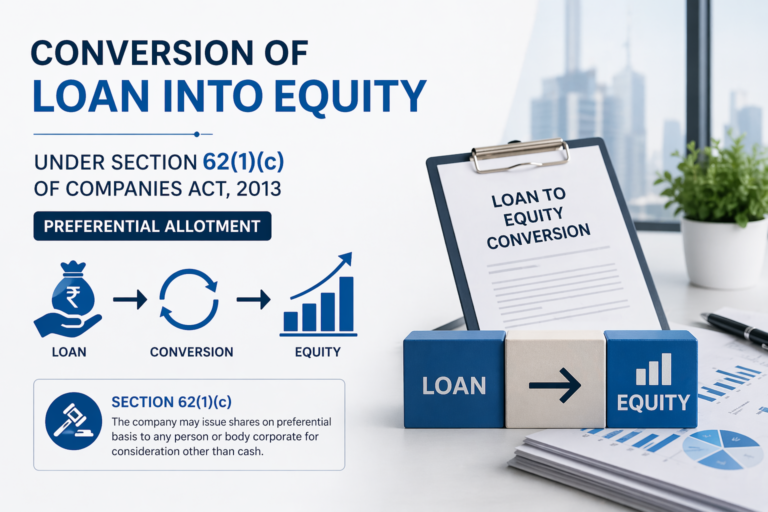
Loan into Equity through Preferential Allotment under Section 62(1)(c)
 LegalGlobe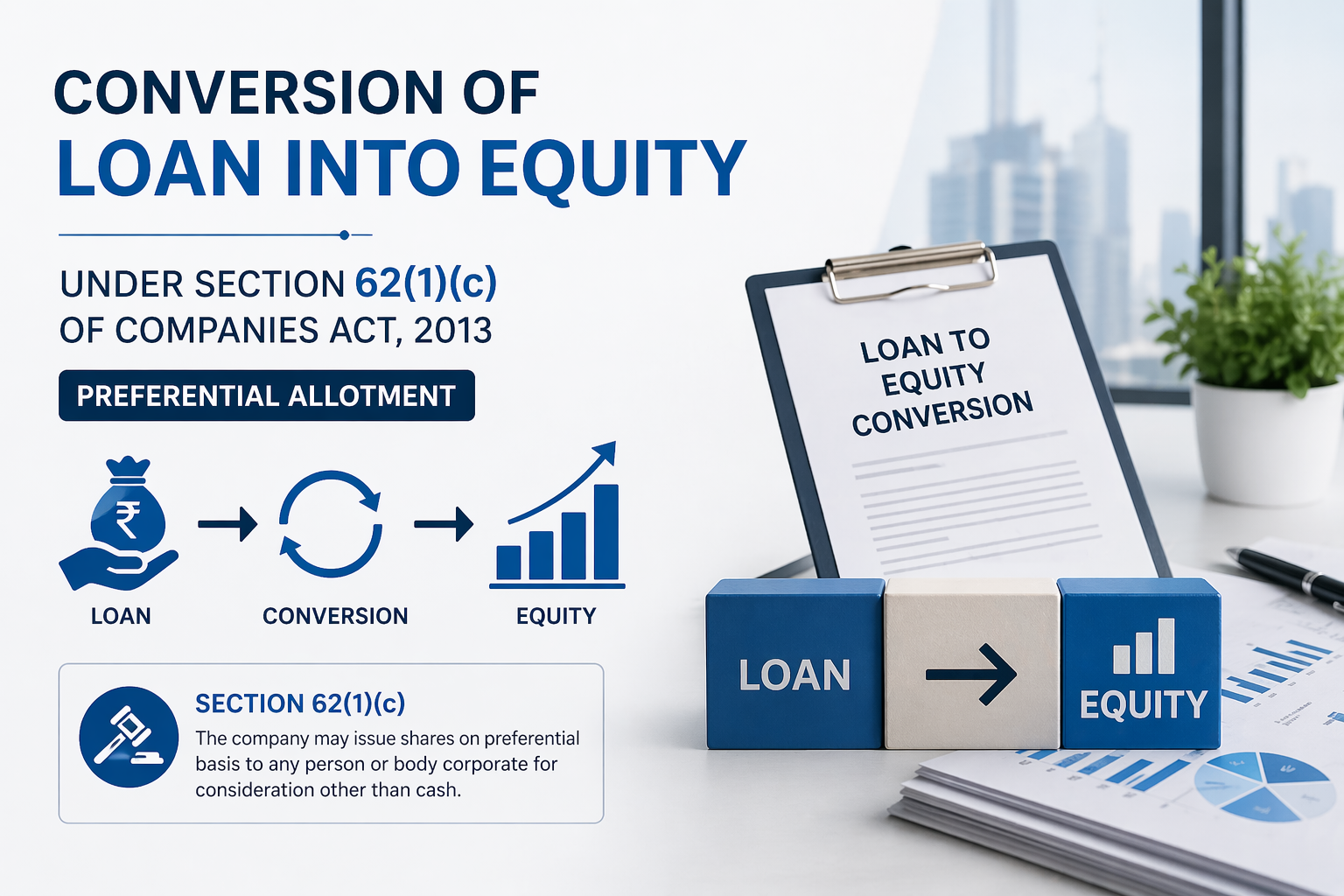
Loan into Equity
Conversion of loan into equity is a common corporate restructuring method used by companies to improve their capital structure and reduce debt burden. Under the provisions of the Companies Act, 2013, such conversion is treated as issue of shares for consideration other than cash and is governed by Section 62(1)(c) read with Section 42 and relevant rules.
📌 Legal Provisions Involved
- Section 62(1)(c) of Companies Act, 2013
Deals with issue of shares on preferential basis. - Section 42 of Companies Act, 2013
Governs private placement of securities. - Rule 13 of Companies (Share Capital & Debentures) Rules, 2014
- Rule 14 of Companies (Prospectus & Allotment of Securities) Rules, 2014
📌 What is Conversion of Loan into Equity?
It means converting an existing loan (secured/unsecured) into equity shares of the company instead of repayment in cash. This is treated as preferential allotment for consideration other than cash.
📌 Key Conditions
- Authorization in Articles (AOA)
Company must be authorized to issue shares. - Special Resolution
Mandatory approval of shareholders. - Valuation Report
Price of shares must be determined by a Registered Valuer. - Compliance with Section 42
Private placement procedure must be followed. - Time Limit
Allotment must be completed within 12 months from SR.
📌 Step-by-Step Process
STEP 1: Board Meeting
- Approve conversion proposal
- Approve notice of EGM
- Approve valuation report
- Identify lender (proposed allottee)
STEP 2: Valuation Report
- Obtain valuation from Registered Valuer
- Determine fair price of shares
STEP 3: Hold EGM
- Pass Special Resolution under Section 62(1)(c)
- Approve conversion terms
STEP 4: Private Placement Offer Letter (PAS-4)
- Issue PAS-4 to lender
- Maintain PAS-5 record
STEP 5: Allotment of Shares
- Conduct Board Meeting
- Allot shares against loan
STEP 6: ROC Filing
- File PAS-3 (Return of Allotment) within 30 days
- Attach:
- Valuation Report
- Special Resolution
- Board Resolution
📌 Advantages
✔ Reduces debt burden
✔ Improves Debt-Equity Ratio
✔ No cash outflow
✔ Strengthens balance sheet
📌 FAQs
❓1. Can any loan be converted into equity?
Yes, subject to compliance with Section 62(1)(c) and Section 42.
❓2. Is valuation mandatory?
Yes, valuation by Registered Valuer is compulsory.
❓3. Is cash required for allotment?
No, it is treated as consideration other than cash.
❓4. Can conversion be done without special resolution?
No, SR is mandatory unless already passed earlier with proper terms.
❓5. Which form is filed with ROC?
Form PAS-3.
📌 Conclusion
Conversion of loan into equity is a powerful restructuring tool, but it must strictly comply with provisions of the Companies Act, 2013. Proper documentation, valuation, and timely filings are essential to avoid penalties and ensure smooth compliance.
🚀 Convert Your Loan into Equity Hassle-Free!
Planning to convert your loan into equity under
Section 62(3) of Companies Act, 2013?
At LegalGlobe, we provide complete end-to-end support for:
✔ Drafting of loan agreements with conversion clause
✔ Board & Shareholder Resolutions
✔ Valuation Report coordination
✔ Share Allotment & Documentation
✔ ROC Filing (PAS-3)
💼 Why Choose LegalGlobe?
✅ Expert in ROC & Corporate Compliance
✅ Fast & Accurate Filing
✅ Affordable Pricing
✅ End-to-End Support
About the Author