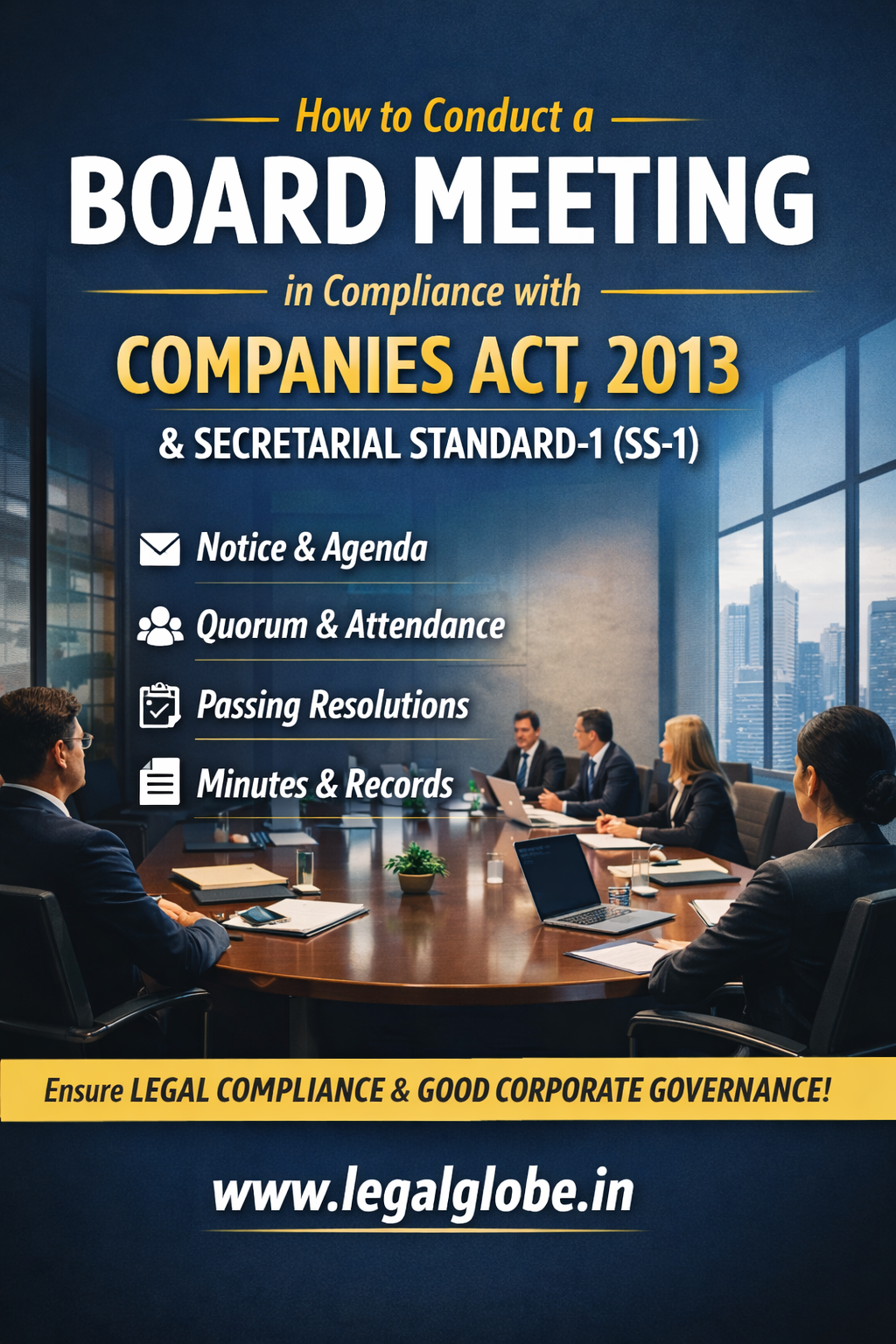
board meeting procedure
🔍 Introduction
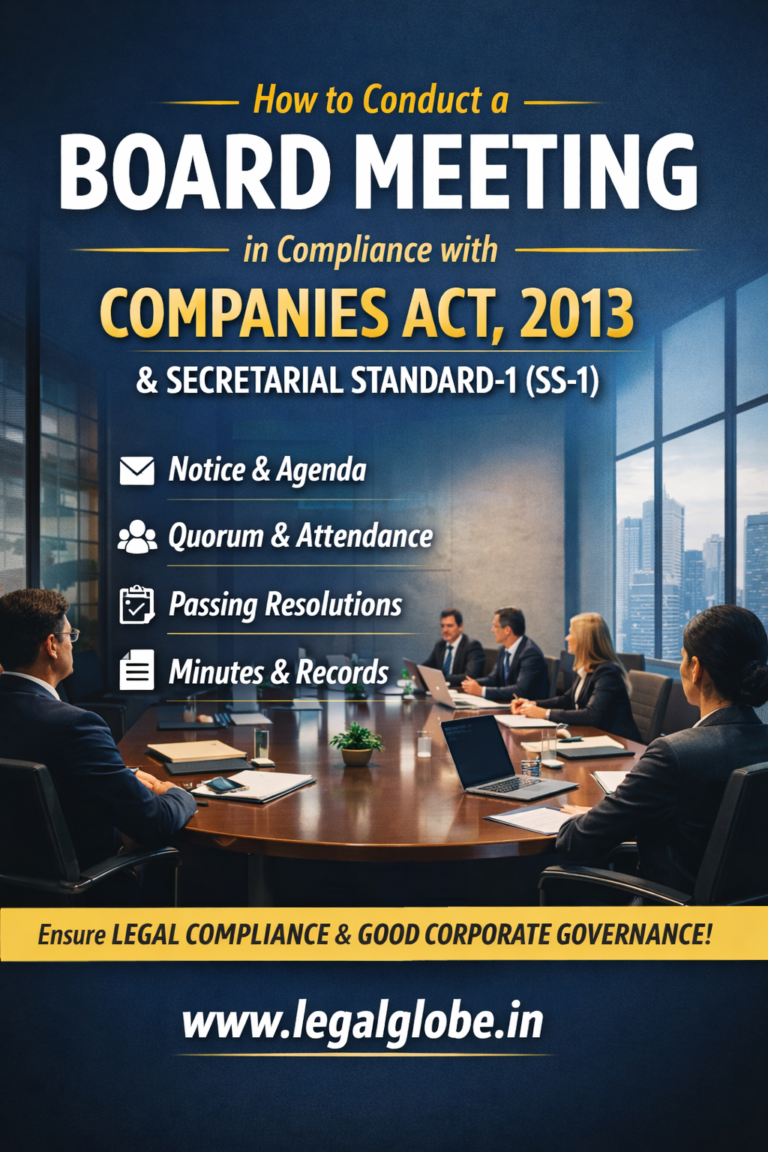
A Board Meeting is the core decision-making platform of a company. If not conducted properly, it can lead to non-compliance, penalties, and invalid decisions.
In this article, we will explain the step-by-step process to conduct a Board Meeting in accordance with the Companies Act, 2013 and Secretarial Standard-1 (SS-1).
📊 What is a Board Meeting?
A Board Meeting is a formal meeting of the Board of Directors where key decisions related to the company are taken, such as:
- Approval of financial statements
- Strategic business decisions
- Compliance-related matters
- Operational planning
⚖️ Applicable Legal Provisions
The following provisions govern Board Meetings:
- Section 173 – Meetings of the Board
- Section 174 – Quorum
- Secretarial Standard-1 (SS-1) issued by ICSI
📝 Step-by-Step Procedure to Conduct a Board Meeting
1️⃣ Issue Notice of Board Meeting
- A minimum 7 days’ notice must be given to all directors
- Notice should include:
- Date
- Time
- Venue
- Detailed agenda
👉 Shorter notice is allowed in urgent cases
2️⃣ Prepare Agenda and Notes
The agenda must be clear and detailed to help directors make informed decisions.
Include:
- List of business items
- Supporting documents
- Explanatory notes
3️⃣ Ensure Quorum
As per Section 174:
- One-third of total directors or two directors (whichever is higher)
👉 Without quorum, the meeting is invalid
4️⃣ Attendance and Participation
- Directors may attend:
- Physically, or
- Through Video Conferencing (VC)
- Attendance register must be maintained
5️⃣ Conduct the Meeting
The Chairman presides over the meeting.
Key points:
- Follow the agenda
- Ensure proper discussion
- Conduct voting (show of hands or poll)
6️⃣ Passing of Resolutions
- Resolutions must be properly proposed and approved
- Interested directors must not participate in voting
7️⃣ Preparation of Minutes
- Minutes must be prepared within 15 days of the meeting
- Signed by the Chairman
Minutes should include:
- Date, time, and venue
- Names of directors present
- Decisions taken
8️⃣ Maintenance of Records
The company must maintain:
- Notice of meeting
- Attendance register
- Minutes book

🚨 Important Compliance Requirements
- Minimum 4 Board Meetings in a year
- Maximum gap between meetings: 120 days
- Compliance with SS-1 is mandatory
❌ Consequences of Non-Compliance
Failure to comply may result in:
- Penalties on the company and officers
- Invalid board decisions
- Regulatory issues with ROC
💡 Practical Tips for Company Secretaries
- Draft notices professionally
- Keep agenda concise and structured
- Maintain proper documentation
- Follow a compliance calendar
📈 Conclusion
Conducting a Board Meeting is not just a formality—it is the foundation of corporate governance.
By complying with the Companies Act, 2013 and SS-1, companies can ensure legal compliance, transparency, and effective decision-making.
About the Author