Introduction
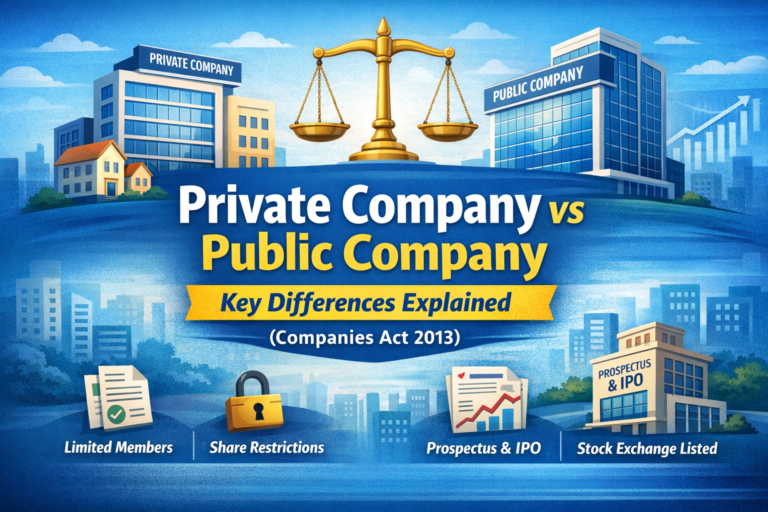
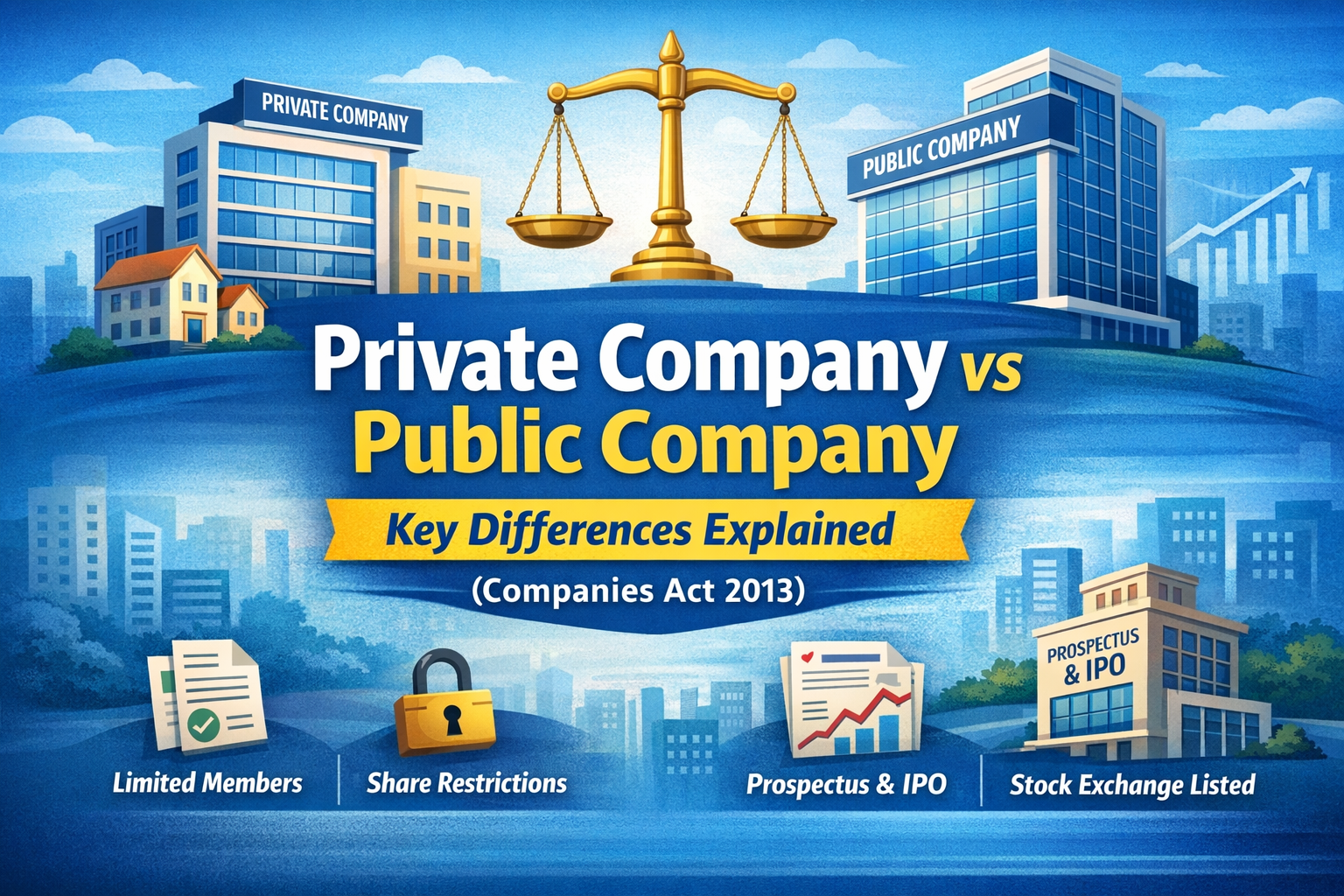
In India, companies are primarily classified into Private Companies and Public Companies under the provisions of the Companies Act, 2013.
Both types of companies have separate legal identities, limited liability, and perpetual succession. However, there are several important differences between them in terms of ownership, compliance requirements, share transferability, and capital raising.
Understanding the difference between a Private Limited Company and a Public Limited Company is essential for entrepreneurs, startups, and investors before choosing the appropriate business structure.
What is a Private Company?
A Private Company is defined under Section 2(68) of the Companies Act, 2013.
According to the Act, a private company is a company which:
- Restricts the right to transfer its shares
- Limits the number of its members to 200
- Prohibits any invitation to the public to subscribe to its securities
Private companies are commonly used by startups, family businesses, and small to medium enterprises.
Key Characteristics of a Private Company
- Minimum 2 members required
- Maximum 200 members allowed
- Minimum 2 directors required
- Shares are not freely transferable
- Cannot invite the public to subscribe to shares
What is a Public Company?
A Public Company is defined under Section 2(71) of the Companies Act, 2013.
A public company is a company that:
- Is not a private company
- Has no restriction on transfer of shares
- Can invite the public to subscribe to its securities
Key Characteristics of a Public Company
- Minimum 7 members required
- No maximum limit on members
- Minimum 3 directors required
- Shares are freely transferable
- Can raise funds from the public through prospectus or IPO
Difference Between Private Company and Public Company
| Basis | Private Company | Public Company |
|---|---|---|
| Governing Provision | Section 2(68) | Section 2(71) |
| Minimum Members | 2 | 7 |
| Maximum Members | 200 | No limit |
| Minimum Directors | 2 | 3 |
| Transfer of Shares | Restricted | Freely transferable |
| Invitation to Public | Not allowed | Allowed |
| Prospectus Issue | Cannot issue prospectus | Can issue prospectus |
| Stock Exchange Listing | Not allowed | Allowed |
| Compliance Requirements | Less compliance | More compliance |
Advantages of a Private Company
1. Lesser Compliance Requirements
Private companies have fewer regulatory compliances compared to public companies.
2. Better Control
Ownership generally remains with founders or a small group of shareholders.
3. Privacy
Financial information is not required to be disclosed to the public to the same extent as public companies.
4. Faster Decision Making
Since the number of shareholders is limited, decision-making becomes quicker.
Advantages of a Public Company
1. Ability to Raise Large Capital
Public companies can raise funds from the public through Initial Public Offerings (IPO).
2. Liquidity of Shares
Shares of public companies can be easily bought and sold in the stock market.
3. Higher Credibility
Public companies often enjoy greater trust among investors and financial institutions.
4. Business Expansion Opportunities
Access to public funds allows companies to expand operations on a large scale.
Private Limited vs Public Limited Company – Which is Better?
The choice between a private company and a public company depends on the size, funding requirements, and long-term goals of the business.
- Startups and small businesses usually prefer a Private Limited Company because of lower compliance and better control.
- Large enterprises that want to raise capital from the public prefer a Public Limited Company.
Conclusion
Both private companies and public companies are important business structures recognized under the Companies Act, 2013. The main differences lie in ownership structure, compliance requirements, and the ability to raise funds from the public.
Before choosing the type of company, entrepreneurs should carefully evaluate their business objectives, funding needs, and regulatory obligations.
If you want to register a Private Limited Company or Public Company, our team at LegalGlobe provides complete assistance with incorporation and ROC filings.
Click here for company registration services.
About the Author