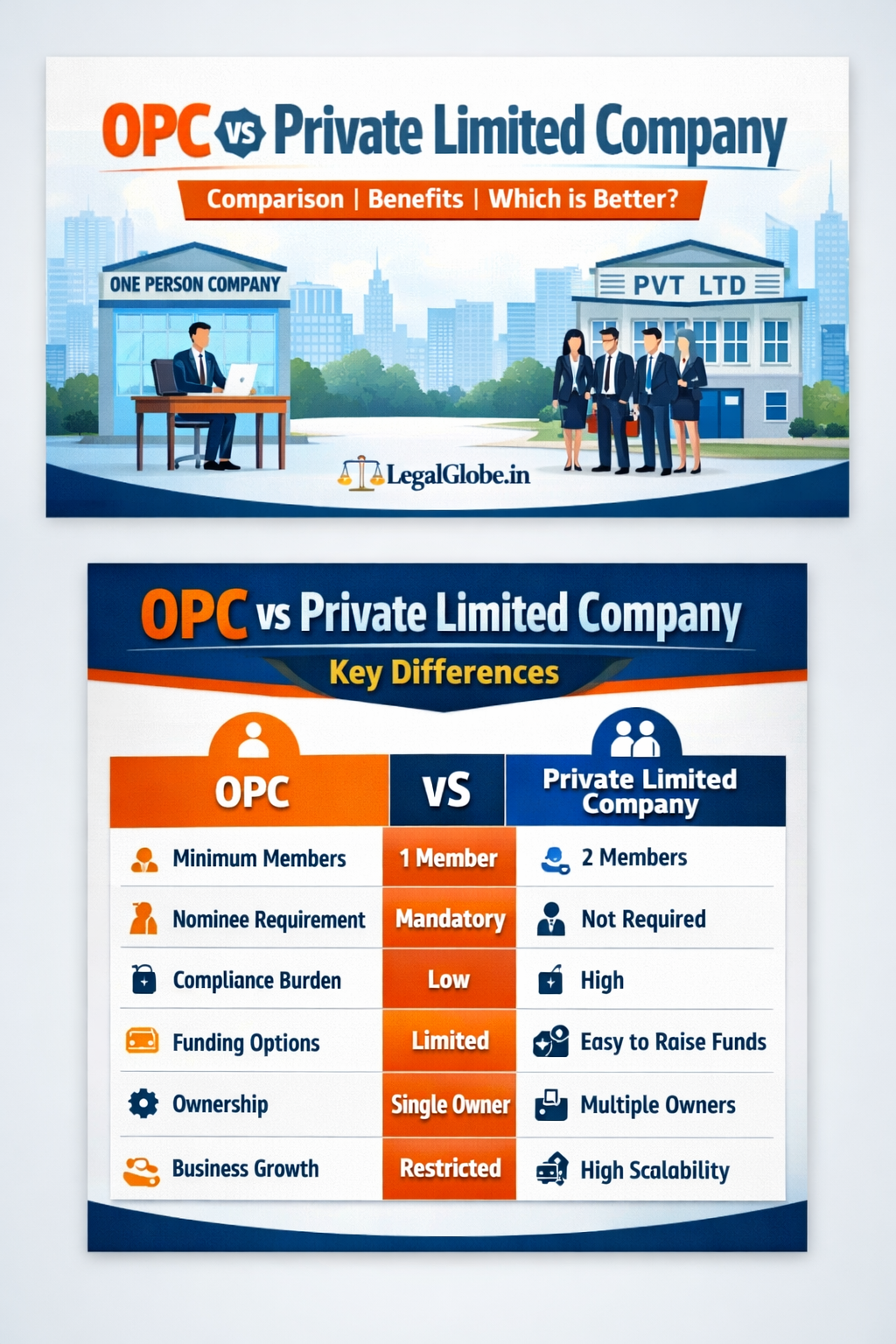
Two popular options under the Companies Act, 2013 are One Person Company (OPC) and Private Limited Company.
After the amendments introduced by the Ministry of Corporate Affairs (MCA) in recent years, the rules related to OPC have become more flexible, making it easier for entrepreneurs to start businesses individually.
This guide explains the latest differences, benefits, and compliance requirements between OPC and Private Limited Company.
What is a One Person Company (OPC)?
A One Person Company (OPC) is a type of company that can be incorporated by a single person as a member and director.
It provides the benefit of limited liability and separate legal identity, similar to other companies.
Under the amended rules notified by MCA, OPC formation has become easier and more flexible for entrepreneurs.
Key Features of OPC
✔ Only one shareholder required
✔ Minimum one director required
✔ Limited liability protection
✔ Mandatory nominee appointment
✔ Separate legal entity
OPC is mainly suitable for solo founders, freelancers, consultants, and small entrepreneurs.
What is a Private Limited Company?
A Private Limited Company is a company that is privately held by shareholders and governed by the provisions of the Companies Act, 2013.
It is one of the most popular business structures used by startups, growing companies, and investor-backed businesses.
Key Features of Private Limited Company
✔ Minimum 2 shareholders required
✔ Minimum 2 directors required
✔ Maximum 200 shareholders allowed
✔ Separate legal entity
✔ Limited liability protection
✔ Better scope for raising funds
Because of these features, private limited companies are considered more scalable for business growth.
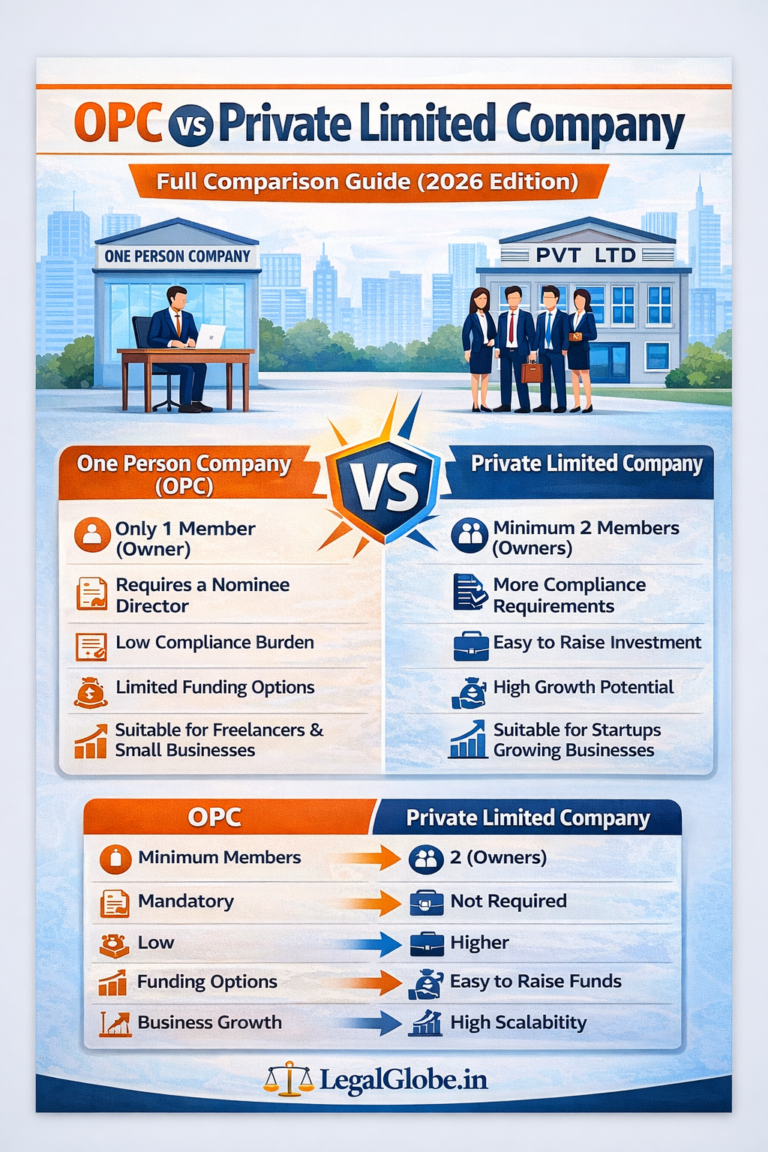
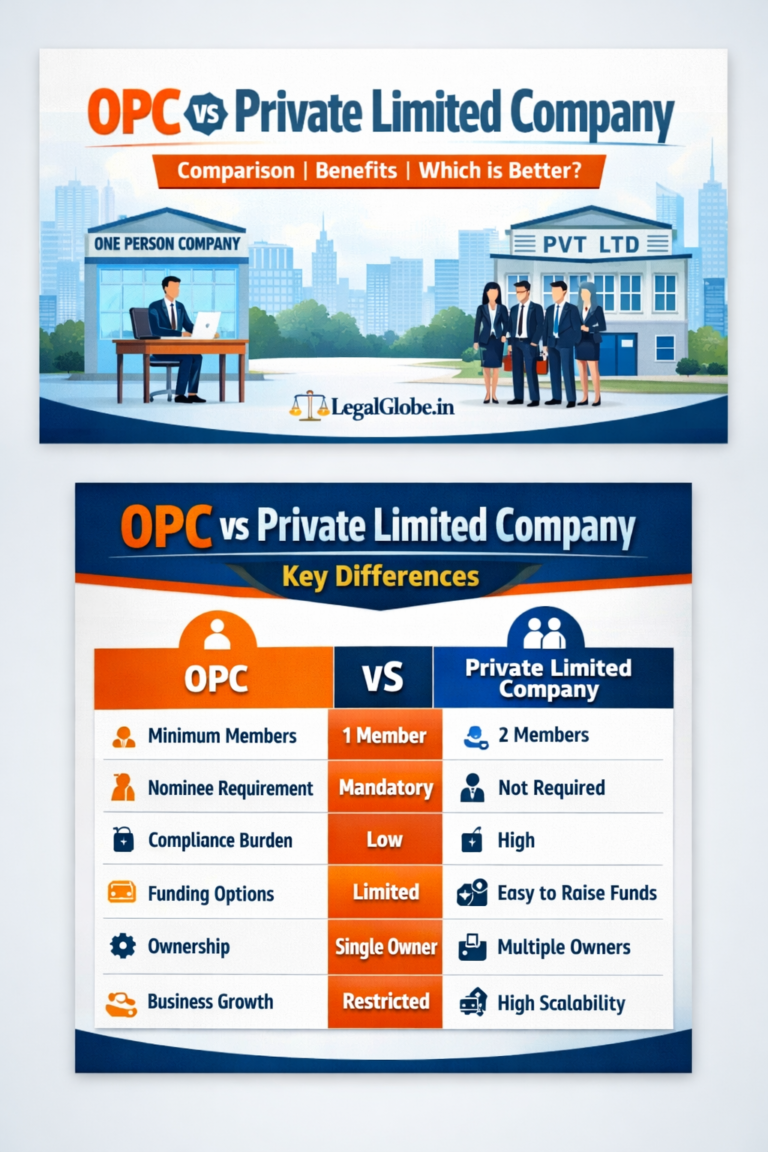
OPC vs Private Limited Company – Detailed Comparison
| Basis | OPC | Private Limited Company |
|---|---|---|
| Minimum Members | 1 | 2 |
| Maximum Members | 1 | 200 |
| Minimum Directors | 1 | 2 |
| Nominee Requirement | Mandatory | Not required |
| Compliance Burden | Lower | Higher |
| Fundraising | Limited | Easy |
| Suitable For | Solo entrepreneurs | Startups & growing companies |
Advantages of OPC
✔ Simple business structure
✔ Limited liability protection
✔ Lower compliance requirements
✔ Suitable for small businesses and consultants
However, OPC has limitations in raising funds and expanding ownership.
Advantages of Private Limited Company
✔ Ideal for startups and scalable businesses
✔ Easy to attract investors and venture capital
✔ Strong credibility with banks and clients
✔ No restriction on business expansion
Because of these benefits, most technology startups and growth-oriented businesses prefer the Private Limited Company structure.
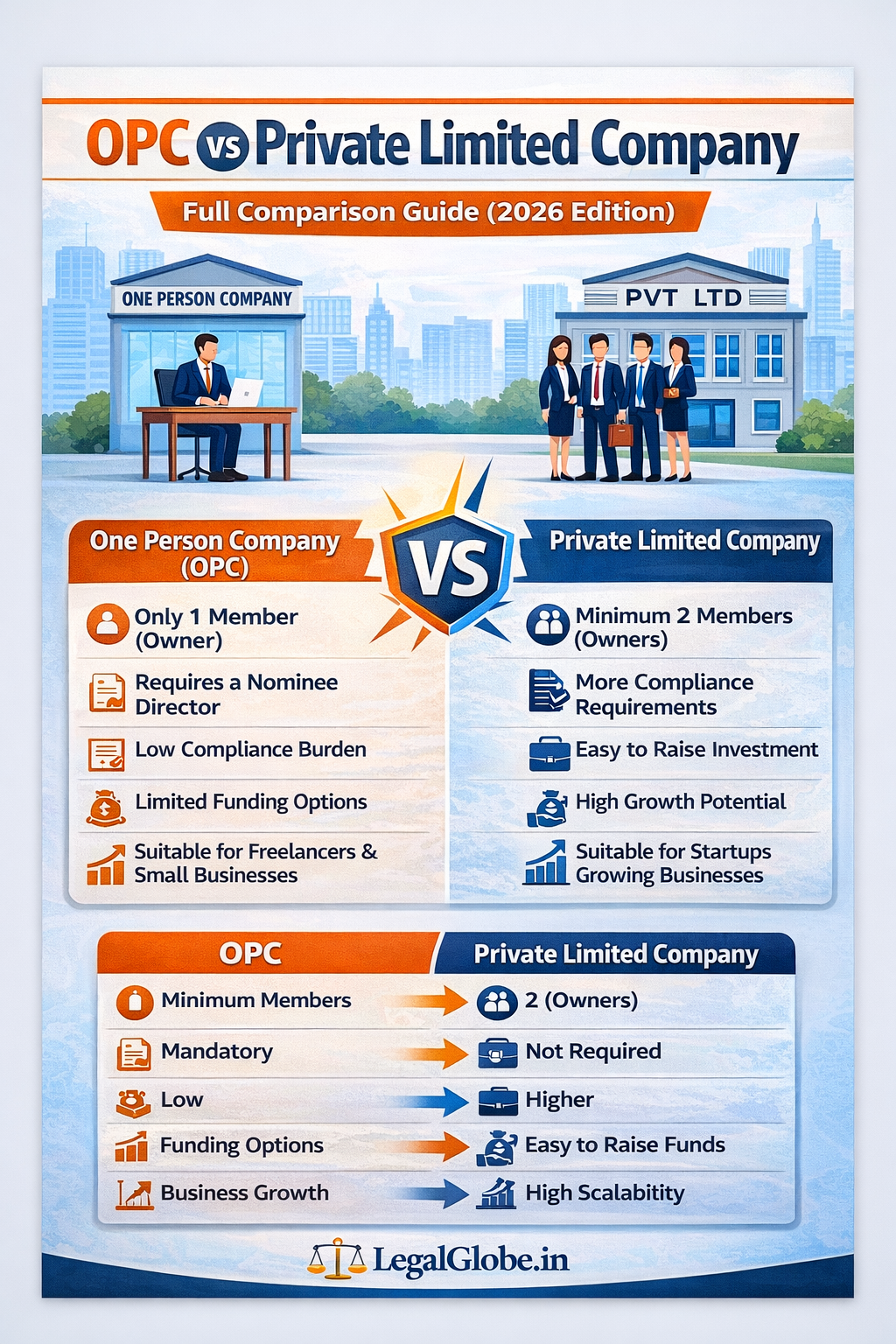
Which is Better – OPC or Private Limited Company?
The choice depends on your business goals.
- If you are starting a small business alone, OPC may be the right option.
- If you want to expand your business and raise investment, a Private Limited Company is usually a better choice.
Many entrepreneurs start with OPC and later convert it into a Private Limited Company as the business grows.
Need Help with Company Registration?
If you want to register a company in India, choosing the right structure is very important.
At LegalGlobe, we provide complete assistance with:
✔ OPC Registration
✔ Private Limited Company Registration
✔ GST Registration
✔ ROC Compliance & Annual Filings
Contact us today to start your business legally and smoothly.
About the Author